

Solar Panels and Selling Your Home: What Homeowners Need to Know Before It Becomes a Deal Breaker
The Hidden Truth About Solar Panels and Home Sales: Why Buyers Walk Away and What Sellers Can Do About It
Solar panels were sold to many homeowners as a smart financial move — lower electric bills, energy independence, tax incentives, and increased home value. In some situations, they absolutely can help. But in today’s real estate market, solar panels are also creating serious challenges for homeowners trying to sell.
Across the country, buyers are walking away from contracts after discovering they must assume a solar lease or large solar loan. In many cases, sellers are shocked to learn the debt attached to the panels may affect the buyer’s financing approval, monthly debt ratios, and overall affordability.
If you own a home with solar panels and are thinking about selling, it is critical to understand the potential roadblocks early — before your home sits on the market or contracts fall apart.

The Problem Many Sellers Discover Too Late
The biggest misconception homeowners have is believing buyers will automatically view solar panels as a benefit. Unfortunately, buyers often see something very different:
- Another monthly payment
- Long-term contract obligations
- Escalating lease payments
- Roof repair concerns
- Uncertainty about maintenance
- Financing complications
Even when the panels reduce utility bills, buyers may still hesitate because they do not want additional debt tied to the property.
This is especially true with leased solar systems.
Many solar leases contain:
- 20–25 year terms
- Annual payment increases
- Transfer requirements
- Credit qualification standards for buyers
- Buyout penalties
A buyer who already feels stretched financially may decide the home simply is not worth the added complexity.
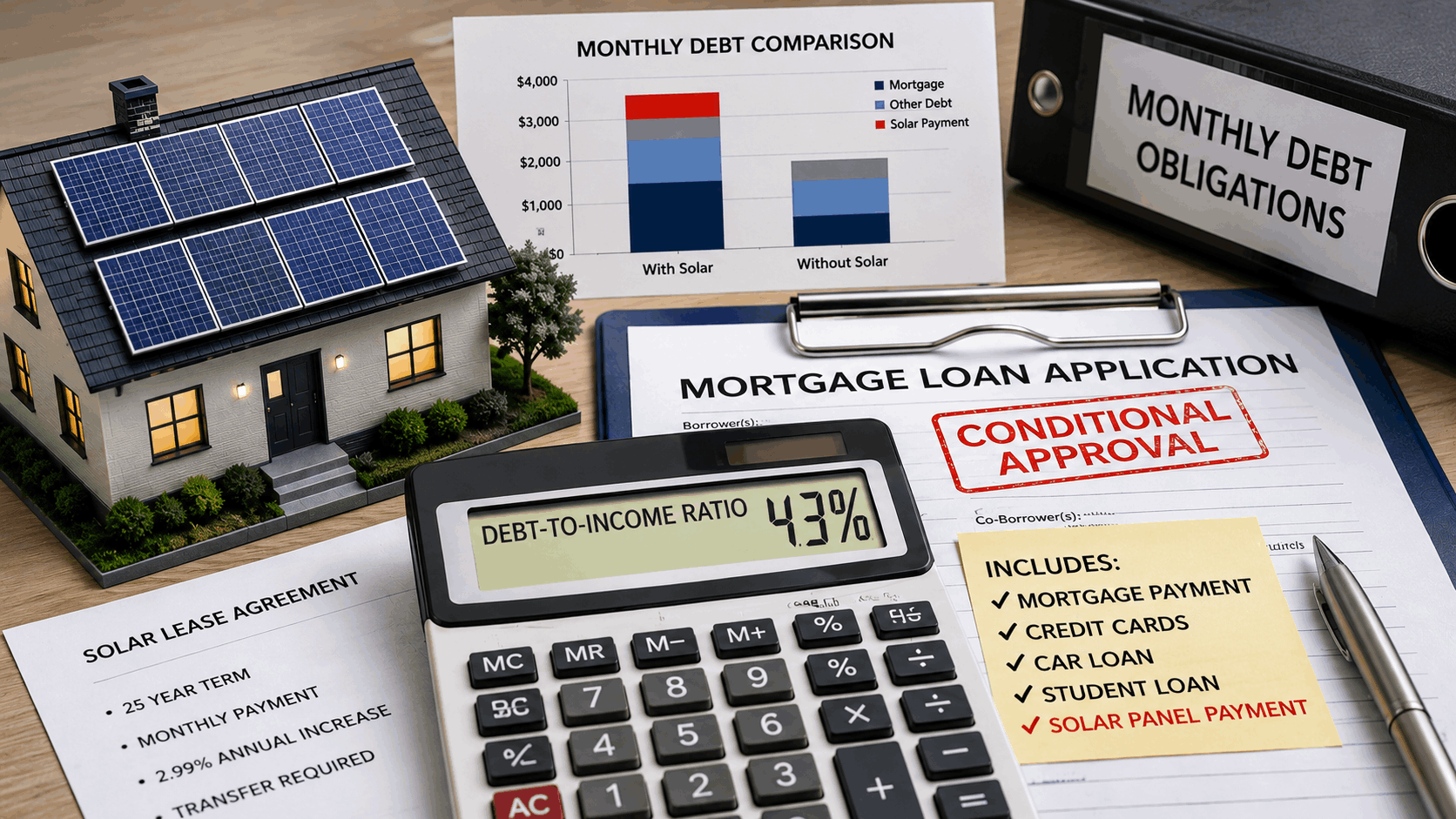
How Solar Panel Debt Can Affect Loan Approval
One of the biggest issues is how lenders treat solar debt during underwriting.
If the solar panels are financed or leased, the payment is often counted as monthly debt against the buyer’s debt-to-income ratio (DTI). That ratio is one of the primary factors lenders use to determine whether someone qualifies for a mortgage.
For example:
- A buyer may qualify comfortably for a mortgage payment alone.
- But adding a $180–$350 solar payment could push them over the lender’s acceptable DTI threshold.
When that happens:
- Buyers may no longer qualify for the loan amount needed
- Their buying power decreases
- The lender may deny the loan entirely
In some situations, appraisers and lenders also struggle to assign value to the solar system itself, especially if the panels are leased instead of owned outright.
This creates a frustrating reality for sellers:
The solar system may have cost tens of thousands of dollars, but buyers and lenders may not value it the same way.
Why Deals Fall Apart
Real estate agents are increasingly seeing contracts fail during:
- Loan underwriting
- Buyer due diligence
- Solar contract review
Sometimes buyers initially agree to assume the solar payments but later reconsider after reviewing the escalating costs over time.
Other buyers simply become nervous about being locked into a 20+ year agreement.
As outlined in a recent solar cost analysis for Oklahoma homeowners, long-term projections can show substantial savings over time — potentially tens of thousands of dollars. However, much of that financial benefit is often back-loaded into future years, while buyers focus heavily on their immediate monthly obligations and flexibility.
That distinction matters.
Buyers do not always think like spreadsheets.
What Sellers Can Do If Solar Panels Become a Problem
The good news is homeowners do have options.
1. Pay Off the Solar Loan at Closing
This is often the cleanest solution.
The seller uses proceeds from the home sale to:
- Pay off the solar loan entirely
- Remove the buyer’s obligation
- Transfer the home free and clear
Once the debt is removed, the solar panels may become far more attractive to buyers because they receive the energy benefit without the payment.
The downside, of course, is the payoff amount can sometimes be substantial.
2. Negotiate a Partial Buyout
Some solar companies allow:
- Reduced payoff settlements
- Prepayment options
- Contract restructuring
This is especially true if:
- The homeowner is facing hardship
- Payments are behind
- The system is older
- The company wants to avoid repossession disputes
Homeowners should request:
- A full payoff statement
- Transfer requirements
- Early termination clauses
- Removal costs
Never assume the information salespeople originally provided is complete.
3. Transfer the Lease to the Buyer
This option works best when:
- The payment is low
- The buyer strongly values energy efficiency
- The home is in a higher price point where DTI ratios are less strained
But sellers should understand:
A solar transfer adds another layer of qualification to the transaction. Buyers may need:
- Credit approval from the solar company
- Additional documentation
- Contract acceptance deadlines
That complexity alone can scare some buyers away.
4. Remove the Solar Panels Entirely
In some cases, removing the system may actually make financial sense.
Homeowners can:
- Have the panels professionally removed
- Repair the roof underneath
- Sell or scrap components for salvage value
Scrap and resale opportunities may include:
- Aluminum framing
- Wiring
- Inverters
- Batteries
- Copper components
While homeowners rarely recover full installation costs, some money can often be recaptured through recycling or resale channels.
However, there are important cautions:
- Roof penetrations must be properly repaired
- Removal should be professionally handled
- Improper removal can create leaks or insurance issues
Before moving forward, sellers should compare:
- Remaining loan balance
- Removal costs
- Potential increase in buyer demand without panels
Sometimes removing the obstacle creates a faster and more profitable sale overall.
The Bottom Line
Solar panels are not automatically bad for resale — but they are not automatically good either.
The reality is more nuanced.
Some buyers love them.
Some lenders tolerate them.
Some deals collapse because of them.
The key is understanding the situation early and creating a strategy before the home hits the market.
Homeowners should gather:
- The original solar agreement
- Current payoff information
- Utility bill history
- Warranty documents
- Transfer requirements
Then work with a knowledgeable real estate professional who understands how solar contracts impact financing, buyer psychology, and negotiations.
Handled correctly, solar panels do not have to become a deal breaker.
Handled poorly, they absolutely can.
Categories
Recent Posts